 CCPTR,
  Confederation with Confederation of Indian Industry(CII)


 National Skill Development Corporation
 DGCA-Approved for Dangerous Goods Training(DGR)
 Ministry of Education
 MoE's Innovation Cell
 Institution's Innovation Council
 AICTE Approved
 We Offer Student Credit Card (Authorized by The Government of West Bengal)

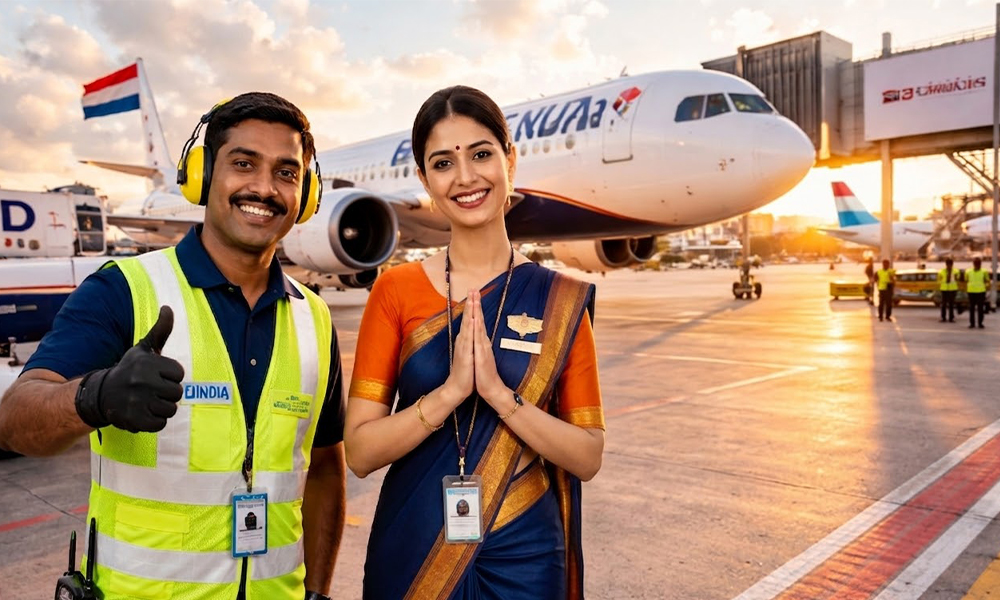
Airports are busy spaces where schedules, passengers, and operations meet every day. Ground staff and cabin crew are at the center of these activities, ensuring travelers move smoothly and safely from arrival to boarding. Airlines take careful steps to assess the skills of these professionals because their work directly affects passenger experience. Understanding how airlines evaluate these skills can help aspiring aviation professionals prepare for success.
Communication Skills
Airlines place great importance on clear communication. Ground staff interact with passengers of all ages, backgrounds, and nationalities. They need to give instructions clearly, answer questions politely, and provide information in a calm and understandable manner.
Cabin crew also rely heavily on communication. Explaining safety procedures, guiding passengers, and managing requests in-flight requires both clarity and empathy. Airlines often test these skills through role-plays, situational exercises, and interviews to see how candidates perform in real-life scenarios.
Customer Service and Attitude
A passenger’s journey can be stressful. Delays, cancellations, or long queues can create tension. Airlines assess how staff handle these situations. A helpful and approachable attitude allows travelers to feel supported and reassured.
For a rewarding career in cabin crew, empathy and patience are essential. Airlines often present real-life scenarios, such as helping a nervous passenger, resolving a seating conflict, or responding to a medical issue, to observe how candidates handle these situations. The way professionals respond shows their ability to keep passengers comfortable, safe, and supported throughout the flight.
Teamwork and Cooperation
Airports function efficiently when teams work well together. Ground staff coordinate with security, airline operations, and baggage handling, while cabin crew work closely with pilots and fellow crew members. Airlines observe how candidates collaborate in group exercises or during practical tests.
Professionals who cooperate, respect colleagues, and step in to help when needed contribute to smoother operations and a positive work environment. Teamwork also shows how well staff can support passengers together.
Problem-Solving and Decision-Making
Unexpected situations are common in airports. A delayed flight, misplaced baggage, or schedule change requires quick thinking. Airlines assess candidates’ ability to respond effectively.
Ground staff may be given scenarios such as a passenger missing a connecting flight or luggage issues. Cabin crew may be tested on managing in-flight emergencies or passenger complaints. The ability to solve problems calmly, make decisions quickly, and guide passengers efficiently is crucial.
Attention to Detail
Even small errors can create complications in aviation. Airlines look for candidates who check tickets and documents carefully, verify baggage information, and follow procedures accurately. Cabin crew are assessed on checking safety equipment, seat arrangements, and service protocols.
Consistency and careful attention to detail ensure smooth operations and build trust among colleagues and passengers.
Physical Stamina and Alertness
Both roles require energy and alertness. Ground staff spend long hours on their feet, walk long distances across terminals, and manage luggage. Cabin crew move through aisles, manage safety equipment, and assist passengers. Airlines assess physical stamina to ensure professionals can handle demanding work while staying attentive and composed.
Professionalism and Appearance
Ground staff and cabin crew represent the airline. Airlines assess grooming, posture, behavior, and overall presentation. Punctuality, discipline, and respectful conduct are also evaluated. Professionalism reflects directly on the airline and contributes to a positive experience for travelers.
Willingness to Learn
Aviation is constantly evolving. Airlines value staff who are open to learning new procedures, technologies, and ways of working. Training sessions, workshops, and hands-on activities help evaluate adaptability. Candidates who are open to growth show promise for long-term career development.
Airlines assess a combination of skills in ground staff and cabin crew to ensure smooth airport operations and excellent passenger experiences. Strong communication, helpful attitude, teamwork, problem-solving, attention to detail, stamina, professionalism, and adaptability form the core of these evaluations.
Aspiring aviation professionals can benefit from enrolling in Diploma in Aviation Hospitality and Aviation Management programme at the best aviation college in Kolkata. These programs provide practical exposure, hands-on learning, and confidence needed to meet airline standards. With preparation, focus, and the right training, a career in aviation offers growth, variety, and the opportunity to create positive experiences for travelers every day.

Leave a comment