 CCPTR,
  Confederation with Confederation of Indian Industry(CII)


 Federation of Indian Chambers of Commerce and Industry
 National Skill Development Corporation
 DGCA-Approved for Dangerous Goods Training(DGR)
 Ministry of Education
 MoE's Innovation Cell
 Institution's Innovation Council
 AICTE Approved
 We Offer Student Credit Card (Authorized by The Government of West Bengal)

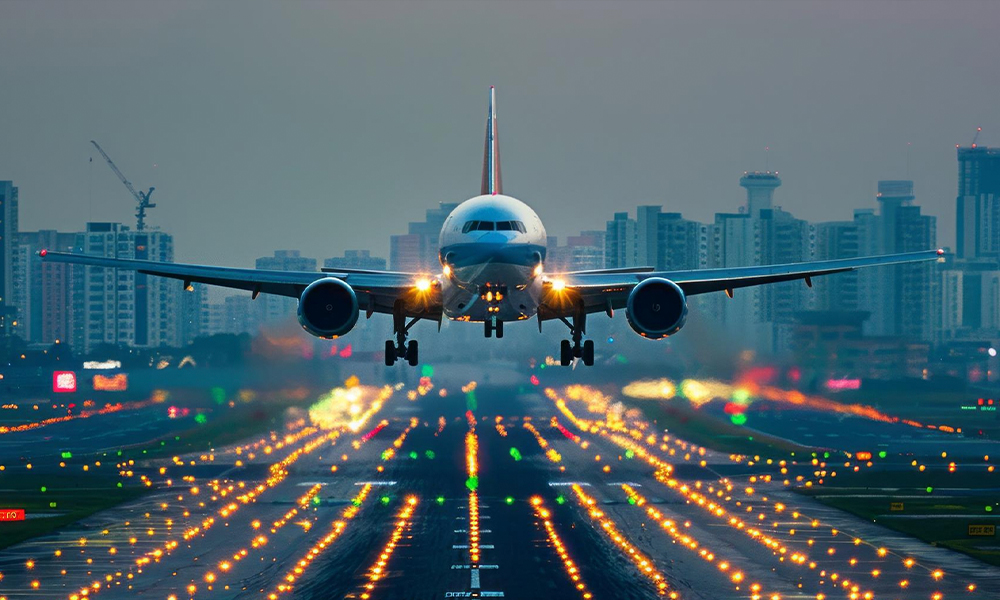
Air travel in India has changed significantly over time. What once felt limited to a smaller section of travellers is now becoming part of regular travel planning for many. Airports are seeing higher passenger numbers, flight options are increasing, and the overall process of flying is becoming more accessible. The future of aviation in India will continue along this path, focusing on expanding reach, improving systems, and making travel more practical for a larger population.
Expanding Reach Across the Country
A key factor behind this growing regional connectivity is the government’s UDAN Scheme (Ude Desh ka Aam Nagrik). Introduced to make flying more accessible, the scheme focuses on connecting smaller cities and regional airports through affordable airfares and increased flight options. By supporting airlines to operate on these routes, it has helped bring many lesser-connected airports into regular use, making air travel a more practical choice for a wider population.
Airports Becoming More Functional
Airport infrastructure is being developed to manage increasing passenger traffic without causing delays. Terminals are being redesigned to improve movement and reduce congestion. In cities like Kolkata, upgrades are expected to improve passenger flow and simplify processes such as check-in, security, and boarding. Better layouts, clearer signage, and improved facilities will help passengers move through airports with fewer complications.
Aviation and Education Growth
The growth of aviation in India is also reflected in the way education in this field is developing. More aviation colleges are now offering focused courses like BBA in Aviation Operations, Diploma in Aviation Hospitality and Aviation Management, giving students a clear starting point if they want to enter this industry. These courses are designed to connect learning with real work, students get familiar with how airports run, how passengers are managed, how airline operations function, and what in-flight service involves. It helps them understand what their day-to-day role could look like.
Another encouraging change is that these courses are now widely available within the country. Students can build the right skills without needing to go abroad, which makes this path more accessible. As airlines expand and airports handle more passengers, the demand for trained professionals will continue to grow, making these courses increasingly relevant for those planning a career in aviation.
The Role of Technology
Technology is becoming an integral part of the travel experience, helping make each step easier for passengers. Digital boarding passes, self-check-in kiosks, and biometric verification systems are already being introduced at many airports. These changes reduce repeated checks and help move things along faster, so travellers spend less time in queues.
Airlines are also using improved systems to manage flight schedules and keep operations on track. Much of this happens in the background, so passengers may not always notice it directly. What they do notice is the difference, shorter wait times, fewer delays, and a journey that feels more comfortable from start to finish.
Focus on Efficiency and Sustainability
Airlines are placing greater emphasis on fuel efficiency and operational performance. Aircraft such as the Airbus A320neo are part of this shift, offering better fuel consumption compared to older models. There is also growing attention on sustainable aviation fuel and improved operational practices. These efforts are important as the number of flights increases and environmental concerns become more relevant in industry planning.
Cost and Accessibility
Affordability continues to influence travel choices. Low-cost carriers have played a major role in making air travel available to a wider group of passengers. Competitive pricing and increased route options will encourage more people to choose flights over other modes of transport, especially when time is a key factor. This trend is likely to continue as airlines compete to attract more passengers.
Employment and Industry Growth
The expansion of aviation will create demand for skilled professionals across multiple roles. Opportunities will grow for pilots, cabin crew, ground staff, maintenance teams, and airport management professionals. Training and skill development will become more important as the industry grows and adopts new systems and technologies.
The future of aviation in India will rely on expanding connectivity, improved infrastructure, and better use of technology. More people will be able to choose air travel, and the overall experience is expected to become smoother over time. As demand grows, flying will become a more regular part of how people move across the country.
This growth is also encouraging many students to consider a career in aviation. For those planning to begin, enrolling in the best aviation college in Kolkata or in their own city can be a strong first step toward building the right skills and understanding the field.

Leave a comment